
Interviewer: Atty. Bilge Kaan ÖZKAN
Guest: Dr. Guillermo Gonzalez Casado – Department of Mathematics
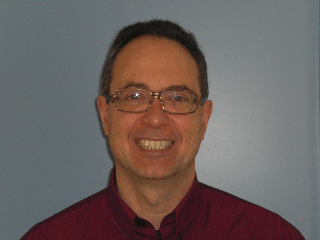
In-Depth Interview with Dr. Guillermo Gonzalez Casado – GNSS, Ionosphere, and Navigation Systems
BKÖ : Dr. Gonzalez Casado, could you describe your current research focus and its relevance to GNSS navigation?
Dr. Casado: My current research is primarily focused on analyzing and modeling the topside ionosphere and the bottom-side plasmasphere using GNSS radio occultation data. This is highly relevant for GNSS navigation because ionospheric conditions directly affect signal propagation, causing delays and phase fluctuations that impact positioning accuracy. By understanding and modeling these effects, we can improve the reliability of GNSS-based augmentation systems like SBAS (Satellite-Based Augmentation Systems) and GBAS (Ground-Based Augmentation Systems), which are critical for aviation, marine, and land navigation applications.In addition, our work seeks to develop more robust correction algorithms that can account for ionospheric variability on both regional and global scales, ultimately improving the stability and resilience of satellite navigation systems used in safety-critical operations.
BKÖ : Can you explain the principle behind GNSS radio occultations and why they are important for ionospheric research?
Dr. Casado: GNSS radio occultations involve observing signals from navigation satellites as they are occulted — that is, pass through the Earth’s atmosphere relative to a low-Earth orbiting satellite. By measuring the bending and delay of these signals, we can derive electron density profiles in the ionosphere and upper atmosphere. This technique provides global coverage and high vertical resolution, allowing us to monitor ionospheric variability in near real-time and to feed data into models that predict GNSS signal behavior.Because radio occultation measurements are relatively independent of ground infrastructure, they are particularly valuable for studying remote regions such as oceans and polar areas, where conventional monitoring networks are sparse.
BKÖ : How do ionospheric disturbances specifically impact SBAS and GBAS systems?
Dr. Casado: Ionospheric disturbances, including storms and scintillations, cause rapid changes in signal propagation speed and phase. For SBAS and GBAS, which rely on precise timing and positioning corrections, these disturbances can degrade accuracy and integrity. My research focuses on characterizing these anomalies and incorporating them into predictive models, so that augmentation systems can adapt their correction algorithms dynamically, maintaining safety and reliability for aviation and other critical applications.In severe conditions, such disturbances may even cause temporary loss of signal tracking, which is why improving the resilience of augmentation systems is a major objective of current GNSS research.
BKÖ : Your work mentions modeling ionospheric super-storms. What methodologies are used for this?
Dr. Casado: Modeling ionospheric super-storms involves combining observational data from GNSS, radio occultation satellites, and ground-based monitoring stations with physics-based and empirical models of the ionosphere. We analyze variations in Total Electron Content (TEC) and compare them with historical data to simulate extreme scenarios. These models help us assess the resilience of GNSS systems under unusual but possible space weather events.By studying these rare but intense disturbances, we can better understand the limits of existing navigation infrastructure and design mitigation strategies for extreme geomagnetic conditions.
BKÖ : What role does the plasmasphere play in GNSS signal propagation, and how is it analyzed in your studies?
Dr. Casado: The plasmasphere, a region of cold plasma extending above the ionosphere, influences GNSS signals indirectly by affecting the overall electron density gradient. Radio occultation data allows us to profile this region, and by combining these measurements with ionospheric data, we can create a full vertical model of the signal environment. This is crucial for accurate corrections in SBAS and GBAS systems, particularly during disturbed geomagnetic conditions.Understanding the interaction between the ionosphere and the plasmasphere is essential for building comprehensive models of the space environment through which GNSS signals propagate.
BKÖ : How do you approach real-time ionospheric monitoring and prediction?
Dr. Casado: Real-time monitoring requires integrating multiple data sources: GNSS networks, satellite occultations, and ground-based ionosondes. We employ advanced filtering and assimilation techniques to estimate current ionospheric conditions, then use physics-based and statistical models to forecast short-term changes. This allows augmentation systems to adjust their corrections proactively rather than reactively.The integration of real-time data streams significantly improves the responsiveness of monitoring systems, enabling faster detection of ionospheric anomalies and more reliable navigation services.
BKÖ : Could you elaborate on mapping functions for GNSS and their importance in your research?
Dr. Casado: Mapping functions relate slant-path delays observed by GNSS signals to vertical electron content along the line of sight. Accurate mapping is essential for converting raw GNSS observations into reliable positioning data. My work involves refining these functions, particularly under non-standard ionospheric conditions, to minimize errors in high-precision applications such as aviation navigation or geodetic surveys.By improving these mathematical transformations, we can better interpret GNSS measurements and enhance the accuracy of ionospheric corrections applied by navigation systems.
BKÖ : How do ionospheric scintillations affect signal integrity, and how are they modeled?
Dr. Casado: Scintillations are rapid fluctuations in signal amplitude and phase caused by small-scale irregularities in electron density. They can lead to loss of lock, measurement errors, or increased positioning uncertainty. We model these by combining empirical observations with simulations of plasma density irregularities, providing statistical forecasts for scintillation probability, duration, and intensity, which are then used in GNSS system risk assessments.These models help engineers design receivers and algorithms that are more robust against signal disruptions.
BKÖ : How does your background in astrophysics contribute to your ionospheric research?
Dr. Casado: My training in astrophysics, particularly in analyzing complex systems like galaxy clusters, has given me strong skills in modeling, statistical analysis, and interpreting sparse observational data. These skills translate directly to ionospheric studies, where we must combine limited measurements with physical models to predict GNSS signal behavior across large spatial scales.The interdisciplinary nature of astrophysics also encourages collaboration across different scientific fields, which is very valuable in space weather and navigation research.
BKÖ : What are the limitations of current ionospheric models, and how do you address them?
Dr. Casado: Current models often rely on historical averages and may not capture extreme events accurately. We address these limitations by integrating real-time GNSS observations and radio occultation data, improving model resolution and responsiveness. Machine learning techniques are increasingly applied to detect patterns and anomalies that traditional models might miss.By combining classical physics-based models with modern data-driven approaches, we aim to create more adaptive and reliable ionospheric prediction systems.
BKÖ : How do you validate your ionospheric models against real-world GNSS performance?
Dr. Casado: Validation involves comparing predicted TEC, delay, and scintillation values with observed GNSS data from multiple stations. We perform statistical analysis over extended periods and diverse geomagnetic conditions. Discrepancies inform model refinement, and successful predictions demonstrate the model’s applicability to operational augmentation systems like EGNOS.Continuous validation is essential to ensure that theoretical models remain consistent with real-world navigation performance.
BKÖ : Could you discuss the impact of your research on aviation navigation and safety-critical applications?
Dr. Casado: By improving the prediction and monitoring of ionospheric disturbances, my research directly enhances the reliability of SBAS and GBAS. This allows aircraft to rely on GNSS-based approaches even during space weather events, reducing risk and enabling more precise, efficient routing. Ultimately, this research supports global aviation safety standards and contributes to the development of next-generation satellite navigation infrastructure.
BKÖ : What advice would you give to young scientists interested in GNSS and ionospheric research?
Dr. Casado: Focus on building a strong foundation in physics, signal processing, and atmospheric science. Gain hands-on experience with GNSS data and satellite observations. Collaboration across disciplines is crucial, as the ionosphere is a complex system influenced by space weather, geophysics, and engineering constraints. Always combine theoretical modeling with real-world validation for impactful research.Curiosity, persistence, and interdisciplinary thinking are essential qualities for researchers who want to contribute meaningfully to this rapidly evolving field.
Av. Bilge Kaan ÖZKAN 'ın kaleminden.. sitesinden daha fazla şey keşfedin
Son gönderilerin e-postanıza gönderilmesi için abone olun.
