
Introduction: Burkina Faso’s New Law and Global Repercussions

As of September 1, 2025, Burkina Faso enacted amendments to the Family and Personal Status Code, which not only impact domestic law but also challenge the international community’s understanding of democracy, human rights, and the rule of law. The new legislation imposes 2–5 years of imprisonment and heavy fines for individuals who “promote homosexuality”; it provides for the deportation of foreign nationals engaging in such behavior and restricts adoption rights.
At first glance, the amendment may be justified as a measure to “protect societal values.” However, a deeper analysis reveals a punitive, exclusionary, and discriminatory approach that conflicts with fundamental principles of law. In particular, it contravenes the best interests of the child, the protection of family unity, equality, and privacy rights under both national and international standards.
The international community perceives Burkina Faso’s step as a new example of democratic regression in Africa, echoing similar legislation in Uganda, Nigeria, and Ghana, where such laws have historically increased violence, societal ostracization, and legal insecurity for LGBT+ individuals. By following a similar path, Burkina Faso risks not only its own citizens’ rights but also regional stability and the integrity of international human rights law.
This paper will provide a detailed analysis of the legal content of the law, its societal impact, and conflicts with international law, while critically examining how law can be misused to restrict individual freedoms under the guise of moral regulation.
Burkina Faso’s Legal System and Family Law Foundations
Burkina Faso’s legal system is historically rooted in French colonial law and continues to follow a civil law framework. While the Constitution guarantees fundamental rights and freedoms, in practice, political authority often instrumentalizes the law to achieve ideological goals.
Structure of Family Law
Family law in Burkina Faso is primarily designed to enforce “moral values”, rather than safeguard individual rights. In contrast, contemporary family law aims to protect privacy, equality, children’s best interests, and social diversity. Burkina Faso’s approach largely defines family solely through heterosexual marriage, marginalizing other identities.
Influence of Traditional Norms
Customary and religious norms significantly influence Burkina Faso’s legal culture. While modernization is claimed, in reality, laws often impose traditional values through state authority. The ambiguity of the “promotion of homosexuality” clause exemplifies this tension, violating the principle of legal predictability.
Critical Assessment
Rather than protecting individual rights, the new legislation transforms family law into a tool for exclusion. Restrictions on adoption jeopardize children’s right to a safe family environment, violating the principle of the best interests of the child. The legal system’s adoption of such an ambiguous, punitive, and discriminatory law highlights weak judicial independence and politicization of the law, with serious implications under international human rights norms.
Content of the New Law and Substantive Provisions
The September 1, 2025, amendment introduced three key provisions: criminal sanctions, deportation of foreigners, and restrictions on adoption.
“Promotion of Homosexuality” and Criminal Sanctions
The law criminalizes individuals who “promote homosexuality” with 2–5 years imprisonment and heavy fines. The vagueness of “promotion” undermines legal certainty. For example:
- A LGBT+ individual publicly expressing their identity could be prosecuted.
- Teachers educating against discrimination could face charges.
- Journalists reporting on LGBT+ rights could be penalized.
This ambiguity makes the law not only punitive but chilling, suppressing basic freedoms.
Deportation of Foreign Nationals
Foreigners engaging in “promotion of homosexuality” can be immediately deported. This poses a threat to international NGOs, human rights defenders, and even UN personnel operating in Burkina Faso. The law aims to shield the state from international oversight, serving isolationist and repressive purposes.
Restriction on Adoption
Adoption rights are denied to LGBT+ individuals or those deemed to “promote homosexuality,” undermining children’s right to a safe family environment. This contravenes the best interests of the child, as recognized by the UN Convention on the Rights of the Child.
Critical Assessment
The law violates:
- Principle of legal certainty
- Proportionality
- The best interests of the child
- International cooperation and human rights norms
Thus, while appearing as a legitimate legal regulation, the law functions as a political instrument of repression, demonstrating how law can be misused to control ideological conformity rather than protect rights.
Child Rights and Adoption Implications
The law’s restriction on adoption is particularly contentious:
Violation of the Best Interests of the Child
The UN CRC Article 3 mandates that the best interests of the child must guide all actions concerning children. Burkina Faso prioritizes state ideology over children’s welfare, reducing them to objects of political control.

Restriction of Access to Family Environment
Children in need of adoption due to poverty, conflict, or family breakdown are denied access to loving homes. Restricting adoption based on sexual orientation undermines societal well-being and the future development of children.
Indirect Discrimination
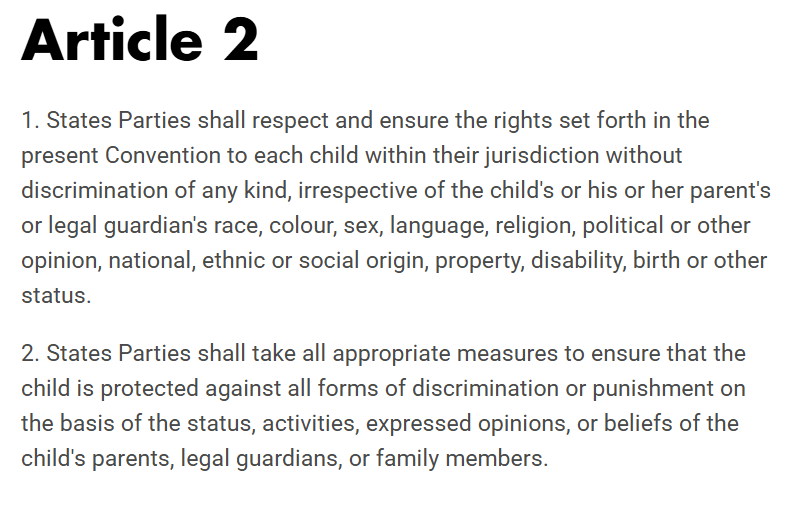
CRC Article 2 prohibits discrimination. The law indirectly discriminates against children by limiting adoption opportunities for LGBT+ individuals, denying children rights based on adults’ identities.
Critical Assessment
The law creates double harm for children:
- Denial of safe family environments.
- Exposure to state-sanctioned ideological discrimination.
Thus, the law prioritizes ideology over children’s rights, conflicting with contemporary standards of child protection.
Human Rights Perspective: Conflicts with International Law
Burkina Faso’s law conflicts with several international human rights standards:
ICCPR
- Article 17: Right to privacy violated by criminalizing expression of sexual orientation.
- Article 19: Freedom of expression restricted.
- Article 26: Discrimination prohibited; law targets LGBT+ individuals.
African Charter on Human and Peoples’ Rights
The law undermines dignity, equality, and non-discrimination, violating the regional human rights framework.
UN CRC
Adoption restrictions violate Articles 3, 2, and 20, undermining child protection obligations.
European Court of Human Rights Precedents
Although not under ECHR jurisdiction, cases like Dudgeon v. UK (1981) and E.B. v. France (2008) highlight international standards protecting sexual orientation and adoption rights. Burkina Faso’s law is inconsistent with these principles.
Critical Assessment
The law represents a direct assault on universal human rights, prioritizing ideological conformity over legal protections. It isolates Burkina Faso from the international community and undermines its legitimacy under human rights law.
Societal Impacts
The September 1, 2025 amendment has profound societal implications:
1. Impact on LGBT+ Individuals
Although the law does not directly criminalize LGBT+ people, its broad “promotion of homosexuality” provision targets and marginalizes this group. Visibility is reduced, advocacy is stifled, and psychological pressure, social exclusion, and risk of violence increase.
2. Freedom of Expression and Organization
Civil society, academics, journalists, and human rights defenders may face charges if they publicly support LGBT+ rights. This seriously restricts freedom of expression and reduces civil society space.
3. Indirect Effects on Women and Children
The adoption restrictions negatively affect children seeking safe family environments. Moreover, gender equality initiatives are indirectly weakened, as discrimination based on sexual orientation is legitimized.
4. Social Polarization
By labeling certain groups as “undesirable,” the law fosters societal division. This may normalize discriminatory policies and weaken social cohesion.
5. Migration and Brain Drain Risks
Young and skilled individuals may seek opportunities abroad due to fear and lack of rights protections, potentially affecting Burkina Faso’s economic and social development.
International Reactions and Diplomatic Consequences
1. United Nations (UN) Reactions
The Office of the High Commissioner for Human Rights and special rapporteurs are likely to criticize the law, citing violations of freedom of expression and anti-discrimination principles. Burkina Faso will face scrutiny in UPR cycles.
2. African Union and Regional Reactions
The African Commission on Human and Peoples’ Rights may intervene, as the law undermines regional human rights standards.
3. European Union and Western Countries
The EU and other Western nations could increase diplomatic pressure, possibly conditioning aid and partnerships on human rights compliance.
4. International NGOs
Human rights organizations such as Amnesty International and Human Rights Watch are expected to issue reports, damaging Burkina Faso’s international image.
5. Risk of Diplomatic Isolation
The law may strain relations with democracies that prioritize human rights, potentially affecting investment, international funding, and regional cooperation.
Comparative Perspective: Similar Laws in Other Countries
1. Uganda, Nigeria, and Ghana
- Similar laws exist criminalizing promotion of homosexuality or same-sex acts.
- Burkina Faso differs by broadly criminalizing expression and behavior, increasing arbitrariness.
2. Key Differences
- Other countries mostly criminalize sexual acts, while Burkina Faso targets speech, behavior, and adoption, making it more radical.
3. International Human Rights Perspective
Even in countries with similar laws, international criticism is widespread. Burkina Faso’s ambiguity and adoption restrictions intensify international scrutiny.
4. Critical Assessment
Compared to peers, Burkina Faso exhibits greater discrimination and legal uncertainty, subordinating individual and child rights to ideological goals.
Conclusion and Recommendations
Burkina Faso’s September 1, 2025 amendment violates both domestic and international human rights standards. Criminal sanctions, deportation, and adoption restrictions undermine basic freedoms.
Main Criticisms
- Legal vagueness and unpredictability (“promotion” concept)
- Violation of the child’s best interests
- Discrimination and human rights infringements
- Social and diplomatic risks
Recommendations
- Clarify the law to eliminate ambiguity and ensure proportionality
- Prioritize child welfare in adoption, removing ideological criteria
- Align domestic law with ICCPR, CRC, and the African Charter
- Promote social awareness and anti-discrimination education
- Engage civil society in protecting rights of LGBT+ individuals and children
Final Remarks
The law represents a regression in the rule of law and human rights, prioritizing ideology over rights and societal well-being. Reforming this law is essential to protect children, uphold equality, and maintain Burkina Faso’s standing in the international community.
Conclusion and Recommendations
Burkina Faso’s September 1, 2025 amendment to the Family and Personal Status Code raises serious concerns under both domestic law and international human rights law. The legislation, which imposes imprisonment and fines for individuals who “promote homosexuality,” allows for the deportation of foreigners and restricts adoption rights, thereby arbitrarily and discriminatorily limiting fundamental individual rights.
Key Criticisms
- Legal Uncertainty and Lack of Predictability: The concept of “promotion of homosexuality” is vague, undermining the principle of legal certainty.
- Violation of the Best Interests of the Child: Restrictions on adoption directly compromise children’s right to access a safe family environment.
- Discrimination and Human Rights Violations: The law conflicts with international treaties, including the ICCPR, CRC, and the African Charter on Human and Peoples’ Rights.
- Societal and Diplomatic Risks: The law increases social exclusion, polarization, international isolation, and economic risk.
Recommendations
- Review and Clarify Ambiguous Provisions: The term “promotion” should be clearly and proportionally defined to prevent arbitrary interpretation.
- Prioritize Children’s Rights: Adoption processes must place the best interests of the child at the forefront, removing considerations of sexual orientation or ideological criteria.
- Align with International Human Rights Standards: Burkina Faso should implement reforms in compliance with ICCPR, CRC, and the African Charter.
- Promote Social Awareness and Education: Programs to prevent discrimination and increase societal awareness should be supported.
- Engage Civil Society: Barriers faced by NGOs working on LGBT+ rights and children’s rights should be removed, and freedom of expression safeguarded.
Conclusion
Burkina Faso’s legislative amendment presents serious risks to the impartiality of the law, the protection of human rights, and democratic standards. A critical review of this legislation is essential, not only to align domestic law with international norms but also to ensure the protection of individuals and the promotion of social peace. The reforms that Burkina Faso undertakes within this framework will be crucial for both domestic stability and its international reputation.
Av. Bilge Kaan ÖZKAN 'ın kaleminden.. sitesinden daha fazla şey keşfedin
Son gönderilerin e-postanıza gönderilmesi için abone olun.
