
Denmark’s 2025 Immigration and Labor Policies: Current Regulations and European Implications
Introduction
I think Denmark’s immigration policies have undergone a remarkable transformation in recent years. Since the 2015-2016 migration crisis, European countries have adopted more cautious and controlled approaches to immigration. Denmark, in particular, has demonstrated this clearly through its center-left government. As of 2025, new regulations affect both labor migration and the movement of international students and asylum seekers.
In my opinion, the rationale behind these policies is twofold: economic considerations and the desire to maintain societal approval. I believe this strategy is likely to spark debates across Europe.
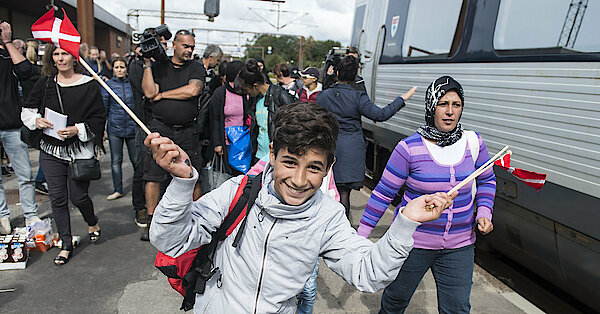
It seems necessary to understand that immigration policies cannot be confined to laws alone. Societal perception, economic balance, and international legal obligations must be considered together. In this article, I will analyze Denmark’s 2025 immigration policies under four main headings, adding my personal reflections, what I think should be done, and the potential impacts of these measures.

Labor Migration Regulations
I believe Denmark’s labor migration policies are among the most striking aspects of these reforms. As of July 1, 2025, the Positive List system has facilitated the entry of highly skilled workers. I think the update in salary thresholds, reducing the annual requirement from 514,000 DKK to 300,000 DKK, provides significant relief for both employers and migrants.
The Certified Employer (SIRI-approved employer) system allows selected employers to accelerate work permits for citizens from 16 designated countries. I think this is crucial because it addresses immediate labor shortages in key sectors such as healthcare, engineering, and IT. However, I also think restricting low-skilled labor may create workforce gaps in the long term.

It seems necessary that Denmark uses this system as a controlled and fair immigration management tool. In my opinion, continuous monitoring of compliance with EU standards and predicting potential labor market shortages are essential steps that should be taken.
Restrictions on International Students
I think this is perhaps the most controversial aspect of Denmark’s 2025 policies. From May 2025 onwards, international students from non-EU countries have faced severe restrictions: they are no longer eligible for work permits, post-graduation job-seeking visas, or family reunification if enrolled in non-full-time study programs.
I think these measures aim to prevent international students from exerting downward pressure on wages. However, it seems necessary that such regulations do not compromise the quality of education or the overall experience of students in Denmark. Otherwise, Danish universities could become less attractive in the long term.
Personally, I think Denmark’s strategy reflects a balance between economic logic and societal stability, but it must not lose sight of the human-centered perspective.
Asylum Policies and Deportation Practices
I think Denmark’s asylum policies in 2025 are among the most restrictive in Europe. In 2024, the number of approved asylum applications dropped to just 864 – the lowest in 40 years . This dramatic decline is not accidental; I believe it reflects a deliberate “zero refugee” approach by the Danish government.
It seems necessary to note that Denmark has introduced short-term protection programs and expanded deportation offices to manage the inflow of asylum seekers. From my perspective, these measures aim to control societal and economic impacts, but they also raise serious human rights concerns. I think the ethical implications of these policies are significant and cannot be ignored.
Personally, I think what should be done is a more balanced approach: Denmark needs to maintain border control and societal stability while also ensuring basic protections for vulnerable populations. Otherwise, the country risks international criticism and moral scrutiny, particularly from human rights organizations.
I also think it’s interesting that the government often justifies these policies in terms of economic efficiency and social cohesion. While this rationale may make sense from a pragmatic standpoint, I believe it’s crucial to consider long-term societal integration. Excluding refugees and limiting asylum may provide immediate relief to the labor market and social services, but it can create tensions and missed opportunities in the long run.

From my perspective, these policies illustrate a broader trend in Europe: countries are experimenting with extreme approaches to migration, which might serve as models but also as cautionary tales. I think Denmark’s approach will continue to spark debates both domestically and internationally.
International Cooperation and Legal Controversies
I think one of the most intriguing aspects of Denmark’s 2025 immigration policies is how they intersect with international law. Denmark has not acted in isolation; rather, it engages with Europe on migration debates, sometimes controversially. For example, together with Italy, Denmark joined eight other European countries in sending a joint letter urging a reinterpretation of the European Convention on Human Rights (ECHR), arguing that the European Court of Human Rights limits national authority

I think this move is bold and reflects a broader tension: national sovereignty versus supranational obligations. In my opinion, it is necessary to carefully balance these interests. Denmark’s attempt to assert more control over its borders may make sense politically, but it risks friction with EU institutions and human rights bodies.
Another example that I think is worth noting is the postponement of the second round of parliamentary votes on citizenship legislation in 2025, now pushed to early 2026 .
I personally think this highlights how sensitive these issues are domestically. Delays and legal uncertainties affect both immigrants waiting for citizenship and the perception of Denmark in the international community.
From my perspective, Denmark’s approach shows that immigration policies cannot be purely domestic concerns. They inevitably interact with international law, European frameworks, and neighboring countries’ policies. I think what should be done is a more transparent dialogue between Denmark, the EU, and human rights institutions to ensure that restrictive policies do not inadvertently violate legal or ethical norms.
Overall, it seems necessary to recognize that while Denmark’s model may be pragmatic and politically appealing at home, it could create long-term diplomatic and legal challenges. I personally believe that other European countries will closely watch Denmark as a potential model, but they should also learn from its risks.
In my view, Denmark’s 2025 immigration and labor policies illustrate a highly strategic, yet controversial approach. By controlling labor migration through the Positive List and SIRI-certified employers, restricting international student rights, and adopting a “zero refugee” approach, the government clearly prioritizes economic stability and social cohesion. I think these measures are effective in the short term, but they also carry ethical, legal, and societal implications that cannot be ignored.
I personally believe that what should be done is a careful balance between pragmatism and human-centered policies. Denmark needs to manage immigration in a way that protects national interests while upholding basic human rights. The restrictions on students and asylum seekers, for instance, could be re-evaluated to ensure that Denmark remains an attractive and fair place for international talent and refugees.
It seems necessary to me that Denmark also engages more proactively with international and European institutions. Cooperation, dialogue, and transparency could help mitigate potential legal conflicts and enhance Denmark’s credibility on the global stage. In my opinion, ignoring international obligations or pushing too far could create long-term challenges that outweigh short-term gains.
Finally, I think Denmark’s model may serve as both a lesson and a warning for other European countries. While it demonstrates a firm, well-structured approach to controlling migration, it also raises critical questions: How far should a country go in prioritizing national interests over individual rights? How can Europe maintain unity while respecting national sovereignty? In my view, these are the questions we all need to reflect on as Europe faces ongoing migration challenges.
In conclusion, I believe Denmark’s 2025 policies are a bold experiment. They show that pragmatic migration management is possible, but I also think that without careful ethical and legal consideration, such policies may risk international criticism and domestic moral dilemmas. We should watch closely, reflect critically, and consider what lessons can be applied to other contexts in Europe and beyond.
Av. Bilge Kaan ÖZKAN 'ın kaleminden.. sitesinden daha fazla şey keşfedin
Son gönderilerin e-postanıza gönderilmesi için abone olun.
