
Interview: Prof. Dr. Götz Bokelmann on the Imminent Istanbul Earthquake
Interviewer: Atty. Bilge Kaan OZKAN
Guest: Prof. Dr. Götz Bokelmann, University of Vienna, Department of Geophysics
First Question:
Dear Professor; Turkey frequently experiences earthquakes, and Istanbul is often described as a ticking time bomb. How do you assess the situation scientifically?
Answer:
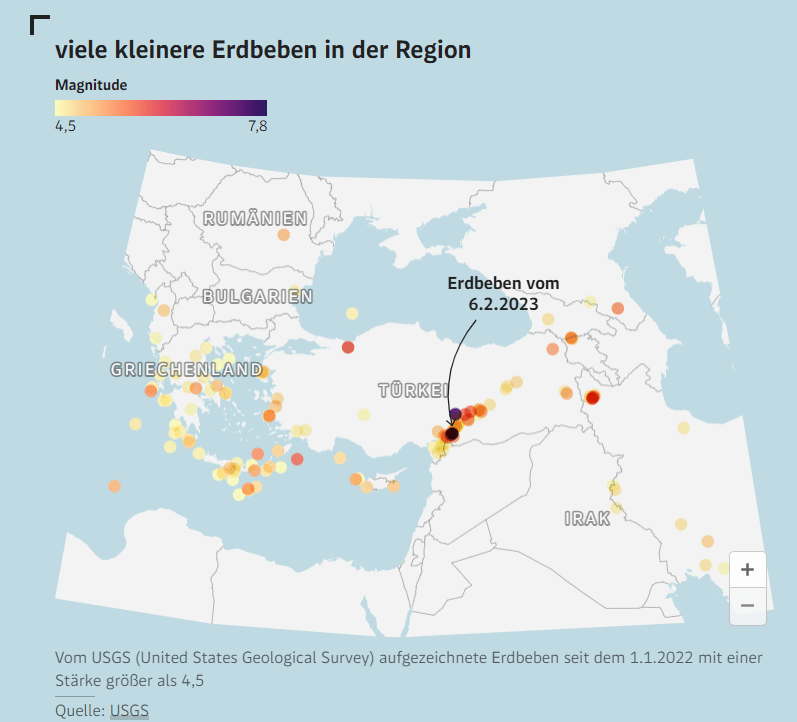
The scientific community is in broad consensus: the North Anatolian Fault is overdue for a major rupture beneath the Sea of Marmara. The question is not if but when. This accumulated stress does not simply vanish; it must eventually be released. Istanbul, with its dense population and vulnerable infrastructure, stands at the epicenter of a predictable disaster. Most of the recent earthquakes have occurred on the northern edge of the Anatolian Plate, the 1,500-kilometer-long North Anatolian Fault: “A major earthquake is feared there too, and it could affect Istanbul and the surrounding area.”
Second Question:
Is there any reliable timeframe for this expected earthquake?
Answer:
We cannot predict earthquakes to the day or year. But history offers a warning: the last major rupture on this fault occurred in 1766. Statistically, Istanbul is well beyond the average recurrence interval. When I say there is a 60% chance within 30 years, people often think, “That sounds far away.” But scientifically, it means the city is already living on borrowed time.
Third Question:
Which districts of Istanbul would be most severely affected?
Answer:
The impact will not be uniform. Low-lying coastal districts with weak soil—Avcılar, Zeytinburnu, parts of Fatih—are particularly fragile. On the Asian side, Kadıköy and Maltepe’s shoreline is at risk. However, I want to stress: even areas with solid ground can collapse if construction quality is poor. The built environment is as decisive as geology.
Forth Question:
In your view, is Istanbul’s current building stock prepared?
Answer:
Frankly, no. The 1999 earthquake should have been a turning point. New regulations were introduced, but enforcement was inconsistent. Thousands of buildings still stand that would not withstand strong shaking. It is not an issue of knowledge—we know what needs to be done. It is an issue of political will and societal priorities. Too often, short-term economic interests overshadow long-term safety.
Fifth Question:
How would you evaluate Turkey’s disaster management strategy?
Answer:
Turkey has impressive capacity for rapid response once disaster strikes, but prevention is the weak link. Earthquake preparedness is more than rescue operations; it is about reducing risk before tragedy occurs. I often compare it to medicine: would you prefer intensive care after a heart attack, or preventive care to avoid the heart attack altogether? The latter saves more lives and costs less.
Sixth Question:
What would be the broader consequences of an Istanbul earthquake?
Answer:
Istanbul is not only Turkey’s cultural heart but also its economic engine. A catastrophic earthquake would reverberate globally—through disrupted trade routes, financial markets, and energy corridors. This is why international cooperation matters: Istanbul’s safety is not only a national concern but a regional and global one.
Seventh Question:
Is there any hope of predicting earthquakes more precisely in the near future?
Answer:
Prediction in the strict sense remains impossible. But monitoring technologies are improving: satellite geodesy, GPS deformation networks, and ocean-bottom seismometers give us unprecedented insight. These do not prevent earthquakes, but they allow for risk maps, early-warning systems, and better-informed urban planning. The tragedy is that we often fail to act on the information we already have.
Eighth Question:
If you were in charge of Istanbul’s earthquake policy, what immediate steps would you take?
Answer:
Three priorities:
- Aggressive urban renewal—unsafe buildings must be demolished now, not after the disaster.
- Public spaces—secure and expand gathering areas instead of allowing them to be turned into commercial projects.
- Public education—turn earthquake drills into a culture, not a rare event. Prepared citizens are as vital as strong buildings.
Ninth Question:
Do you see enough collaboration between Turkish and international scientists?
Answer:
The collaboration is improving, but it is still too fragmented. The Marmara region is one of the world’s best natural laboratories for seismology. International teams are eager to cooperate, but data sharing is sometimes restricted by bureaucracy or politics. Science thrives on openness. Transparency here is not only academic courtesy—it could literally save lives.
Tenth and the Last Question:
Finally, what message would you like to give to Istanbul’s citizens?
Answer:
Istanbul is a magnificent city, but it is also fragile. The earthquake cannot be stopped, but the tragedy can be minimized. My message is simple: demand accountability, insist on safe housing, and treat earthquake preparedness as a daily responsibility, not a distant possibility. The real danger is not the earthquake itself—it is complacency.
Av. Bilge Kaan ÖZKAN 'ın kaleminden.. sitesinden daha fazla şey keşfedin
Son gönderilerin e-postanıza gönderilmesi için abone olun.
